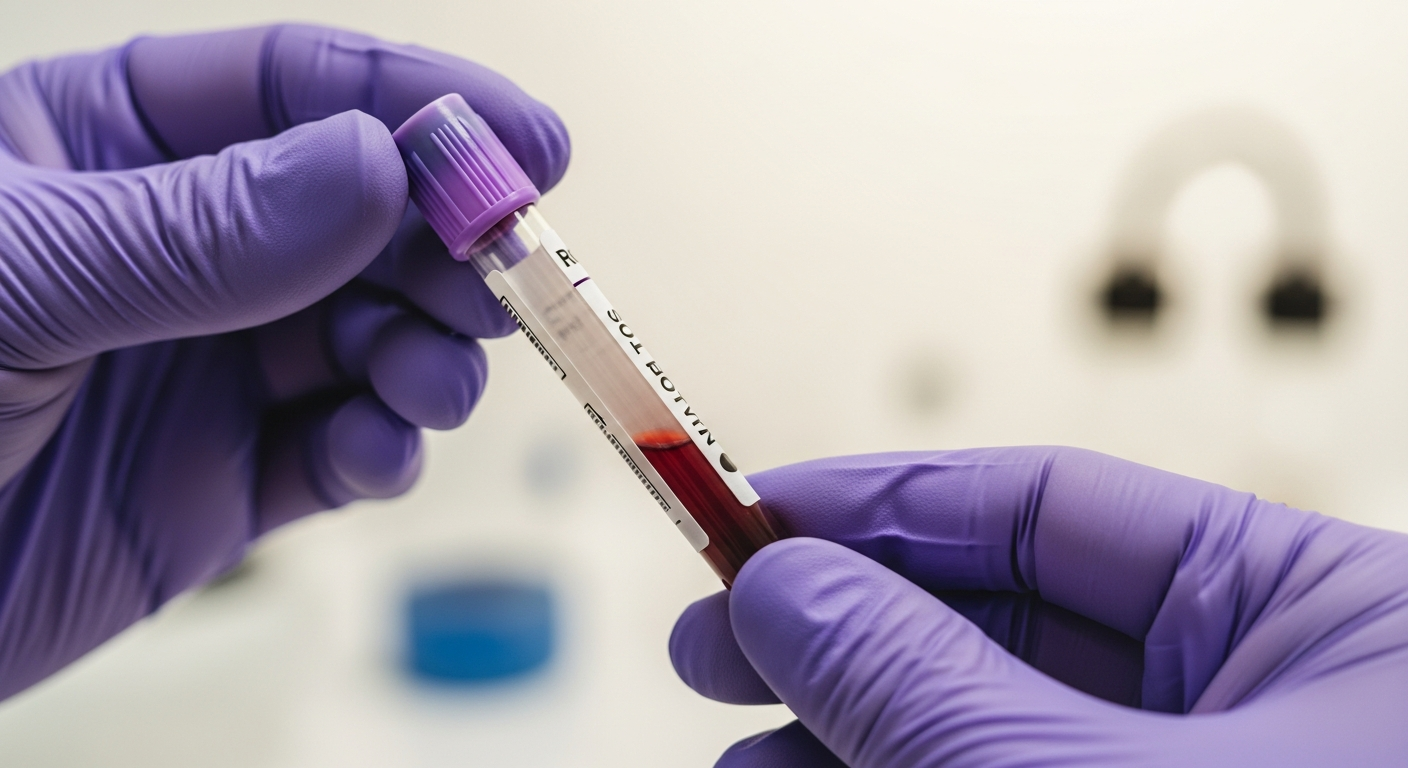
The full blood count (FBC) is the single most frequently requested blood test in the UK. It's included in virtually every routine blood panel and screening assessment. Despite that, most people who receive FBC results have little understanding of what the various components mean. In my experience, patients are often alarmed by a single slightly out-of-range marker that turns out to be clinically insignificant, or reassured by a "normal" result that actually warrants a closer look.
This article explains each marker, what abnormalities might suggest, and when further investigation is warranted.
What is a full blood count?
A full blood count measures the cellular components of your blood: red blood cells, white blood cells, and platelets. It provides an overview of your blood's ability to carry oxygen, fight infection, and form clots. The test involves a simple venous blood sample and is analysed by an automated haematology analyser within hours.
The FBC is not a single measurement. It's a panel of related markers, each telling a different part of the story. Before looking at the individual components, one important point: reference ranges vary between laboratories depending on the analyser used and the local population. The ranges quoted in this article are approximate guides. Always compare your results to the specific reference range printed on your own lab report [NICE CKS, 2025].
Reference ranges represent the central 95% of results from a healthy population. That means roughly 1 in 20 perfectly healthy people will have a result that falls outside the "normal" range by pure statistical chance. A single borderline result doesn't automatically indicate a problem.
Red blood cell markers
Haemoglobin (Hb) is the oxygen-carrying protein in red blood cells and the primary marker for anaemia. Approximate reference ranges are 130 to 170 g/L for men and 120 to 150 g/L for women, though these vary by laboratory. A haemoglobin below the reference range is generally classified as anaemia, but your clinician will interpret this in context. During pregnancy, for example, blood volume expands and haemoglobin naturally drops, with levels above 110 g/L considered adequate [NICE CKS, 2025]. A raised haemoglobin may suggest dehydration, polycythaemia (a condition where too many red blood cells are produced), or chronic low oxygen levels from lung disease.
Red blood cell count (RBC) measures the total number of red blood cells per litre of blood. This broadly correlates with haemoglobin but provides additional information about red cell production.
Haematocrit (Hct) is the proportion of your blood volume occupied by red blood cells. A raised haematocrit may suggest dehydration or polycythaemia. A low haematocrit accompanies anaemia.
Mean cell volume (MCV) is the average size of your red blood cells. This is one of the most clinically useful components of the FBC because it helps classify the type of anaemia. A low MCV (below 80 fL, called microcytic) often points to iron deficiency or thalassaemia trait. A normal MCV (80 to 100 fL, normocytic) can accompany acute blood loss, chronic disease, or early iron deficiency. A high MCV (above 100 fL, macrocytic) is commonly seen with B12 or folate deficiency, excess alcohol, hypothyroidism, liver disease, or certain medications.
Mean cell haemoglobin (MCH) is the average amount of haemoglobin per red blood cell. It broadly mirrors MCV and helps confirm the type of anaemia.
Red cell distribution width (RDW) measures variation in red blood cell size. An elevated RDW suggests that red cells of different sizes are being produced, which is typical of iron deficiency (where new, smaller cells are being made alongside older, normal-sized cells). RDW can sometimes rise before MCV or haemoglobin change, making it a useful early signal, though it's not specific enough to confirm the diagnosis on its own [Palmer et al., Int J Lab Hematol, 2015].
White blood cell markers
White blood cell count (WBC) measures the total number of white blood cells. A raised WBC (leucocytosis) is most commonly caused by infection, but can also occur with inflammation, physical or emotional stress, steroid use, and smoking. In rare cases, a persistently elevated count may prompt investigation for haematological conditions (cancers of the blood or bone marrow), though these account for a very small fraction of raised WBC results. A low WBC (leucopenia) can occur with viral infections, certain medications, autoimmune conditions, or bone marrow suppression.
The WBC is broken down into a differential count, which provides more specific information:
Neutrophils are the most abundant white cell type and the first responders to bacterial infection. A raised count (neutrophilia) is most often associated with bacterial infection, inflammation, or steroid use. A very low count (neutropenia) increases susceptibility to infection and may require urgent assessment.
Lymphocytes are key players in adaptive immunity, including T cells and B cells. Lymphocytes often rise during viral infections (lymphocytosis) and may fall with certain infections (including HIV), immunosuppressive medications, and some autoimmune conditions.
Monocytes are involved in immune surveillance and chronic inflammation. Modest elevations are common in chronic infections such as tuberculosis and endocarditis (an infection of the heart's inner lining).
Eosinophils tend to rise in allergic conditions (asthma, eczema, hay fever), parasitic infections, and some drug reactions. A significantly raised count may prompt investigation for parasitic infection or other eosinophilic conditions.
Basophils are the least common white cell type. Significant elevations are rare and may warrant investigation for a myeloproliferative disorder (a condition where the bone marrow produces too many blood cells).
Platelets
Platelet count measures the cell fragments involved in blood clotting. The normal range is typically 150 to 400 x 10⁹/L. A low platelet count (thrombocytopenia) can result from immune thrombocytopenic purpura (ITP, a condition where the immune system attacks platelets), bone marrow problems, viral infections, liver disease, or medications. A high platelet count (thrombocytosis) is most commonly reactive, driven by infection, inflammation, iron deficiency, or recent surgery. Occasionally it may indicate a myeloproliferative disorder, but this is uncommon.
Mean platelet volume (MPV) measures the average size of your platelets. Larger platelets tend to be more metabolically active. Some research, including a meta-analysis of over 2,800 patients, has found an association between elevated MPV and cardiovascular events [Chu et al., Platelets, 2010]. However, MPV is not currently used in routine cardiovascular risk assessment and its clinical utility remains debated.
What the FBC does not tell you
Despite being the most common routine blood test, the FBC has important limitations:
It doesn't measure iron stores directly. Ferritin is needed for that, though it's worth noting that ferritin is an acute-phase reactant, meaning it can be falsely elevated during infection or inflammation. Your doctor may check CRP alongside ferritin for a clearer picture.
It doesn't assess kidney or liver function (separate biochemistry tests are required)
It doesn't measure hormones, vitamins, or inflammatory markers
A normal FBC doesn't exclude iron deficiency, B12 deficiency, or early disease. Additional targeted tests may be needed if symptoms persist
This is why the FBC is typically ordered alongside other blood tests rather than in isolation.
When to see your GP
If your FBC shows abnormalities, your GP can assess the clinical significance and arrange further investigation if needed. Abnormalities that typically warrant follow-up include unexplained anaemia, persistently low or high white cell counts, and low platelet counts.
If you're experiencing persistent fatigue, unexplained bruising, recurrent infections, or unexplained weight loss, an FBC is usually one of the first tests your GP will request. Don't wait for a private test if you have these symptoms. See your doctor.
References
NICE. Anaemia, iron deficiency. Clinical Knowledge Summaries (updated October 2025). NICE CKS
Chu SG, Becker RC, Berger PB, et al. Mean platelet volume as a predictor of cardiovascular risk: a systematic review and meta-analysis. J Thromb Haemost. 2010;8(1):148-156
NICE. Suspected haematological cancer: recognition and referral. Guideline NG12 (2015, updated 2024). NICE NG12
Written by Dr James Coleman, GP and founder of Brooksby Medical. Dr Coleman is a practising General Practitioner who founded Brooksby Medical to give patients direct access to the blood tests and clinical interpretation they need, without waiting lists.
Medically reviewed: March 2026 | Next review due: March 2027
Medical disclaimer: This article is for informational purposes only and does not constitute medical advice. Blood test results should always be interpreted by a qualified healthcare professional in the context of your individual symptoms, medical history, and clinical picture. If you have concerns about your health, please consult your GP.
Medical disclaimer. This article is for informational purposes and does not constitute medical advice. Blood test results should always be interpreted by a qualified healthcare professional in the context of your individual symptoms, history, and clinical picture. If you have concerns about your health, please consult your GP.